Art · March 31, 2025
calculation as an art form - Interview with artist Norimichi Hirakawa
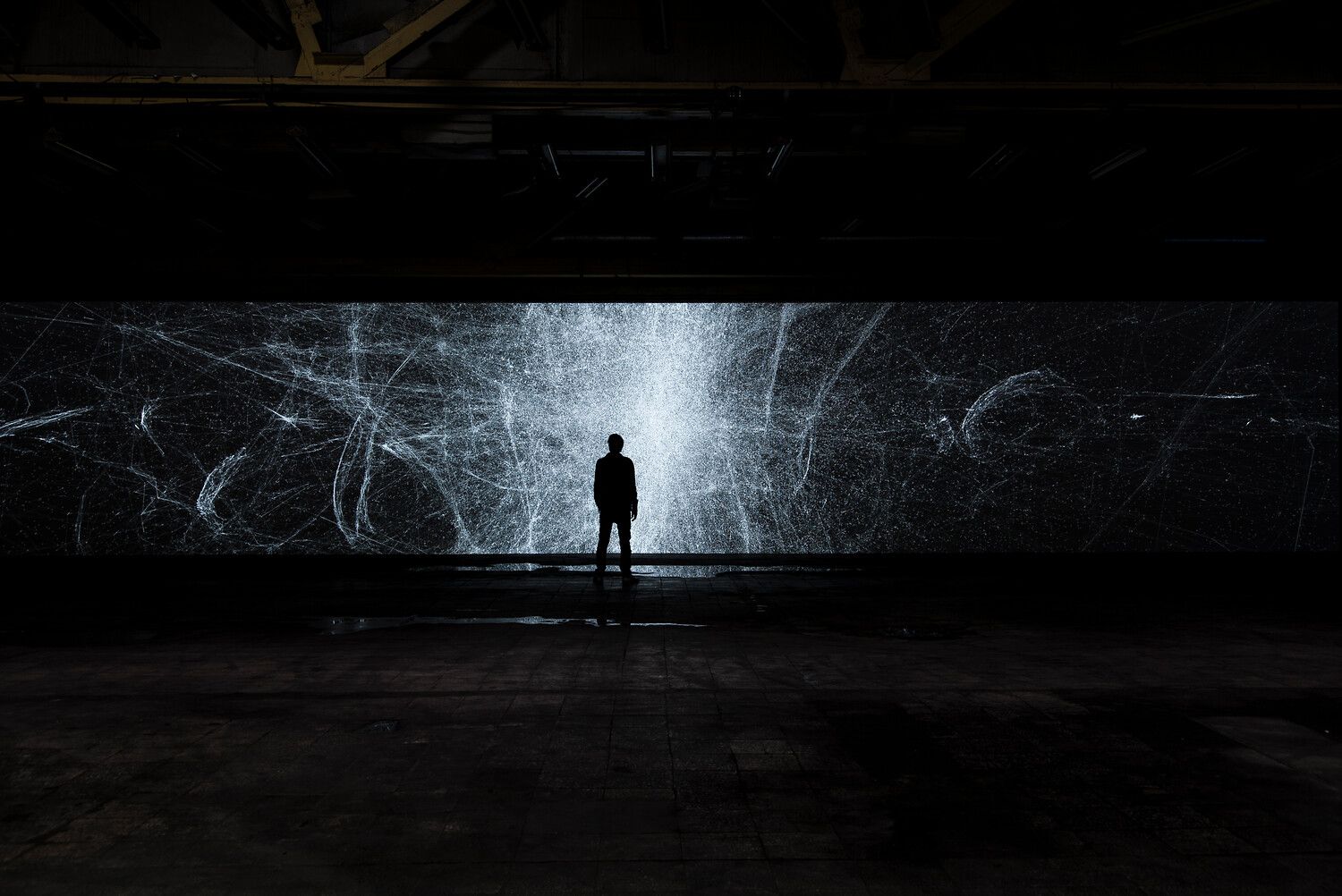
Auf Deutsch lesenIn the world of contemporary art, few creators manage to blend the rich history of traditional practices with the daring spirit of modern experimentation quite like Norimichi Hirakawa. Known for his deeply intricate, thought-provoking works that explore the interplay between natural elements and human intervention, Hirakawa has captivated audiences worldwide. His unique approach merges a refined attention to detail with a broader meditation on the complexities of time, nature, and existence itself. In this interview, we delve into Hirakawa's creative process, his artistic inspirations, and the profound themes that guide his innovative work. Read more about the headlining artist of anonymous art project for this year's Art Düsseldorf.
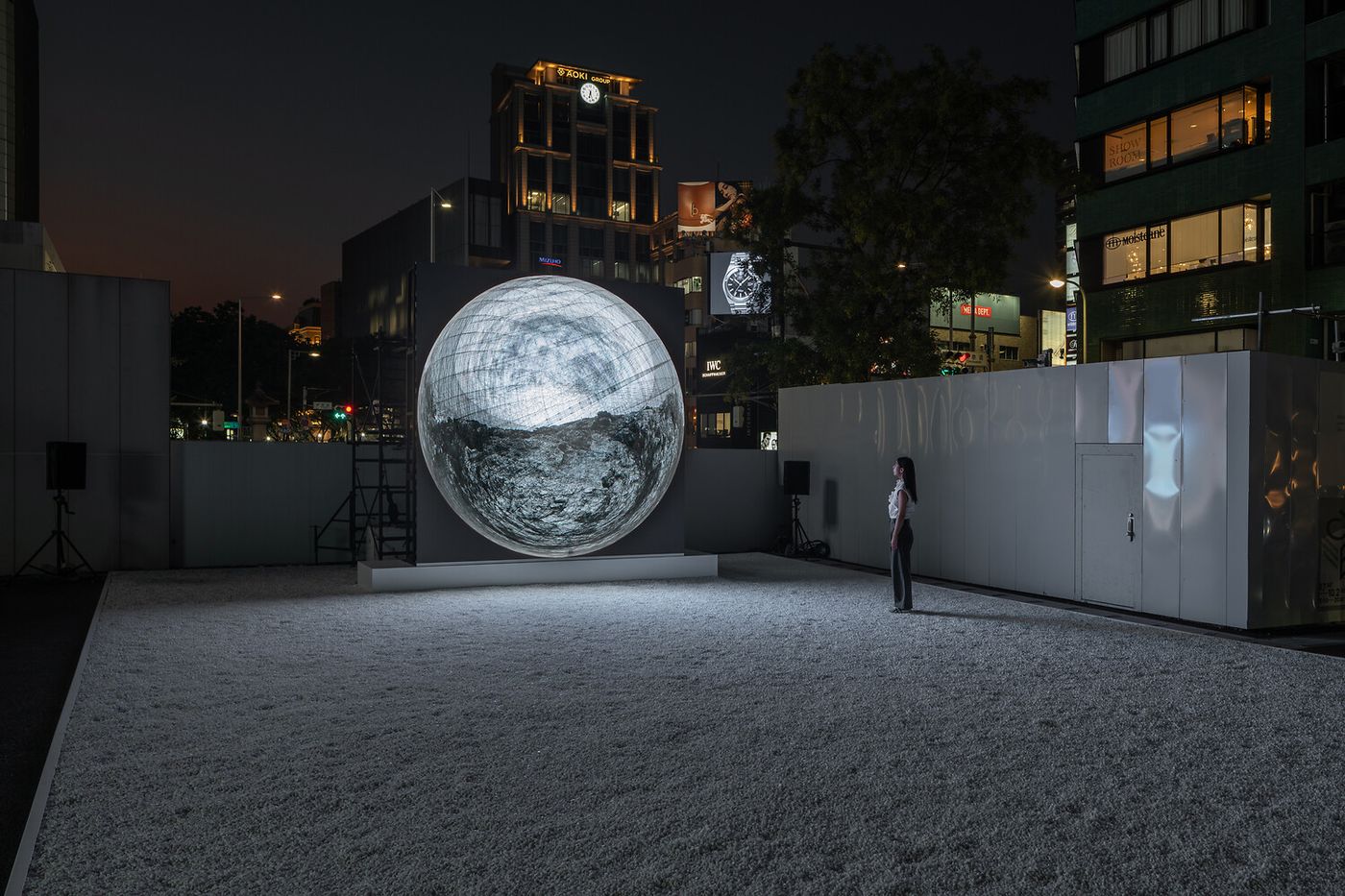
![Norimichi Hirakawa: datum [ moerenuma park ], installation view.](https://cdn.sanity.io/images/9p6ybczz/production/ab1fe8ac85cc71232be63635c16b37339c9f74e9-1500x1001.jpg?w=1400&auto=format&fit=max)
Your work exists at the intersection of art, technology, and scientific inquiry. What initially drew you to work with computation and data as artistic materials? Was there a defining moment in your career when you realized this was your medium?
No, I think it happened gradually. The texture, or maybe touch, of things generated based on some algorithm always has the same feeling or sense. Whether it comes from natural phenomena or not, there is something human beings cannot produce with their body and mind. I like that feeling.How do you view calculation as an art form, and what role does it play in your creative process? What type of calculations do you use?
I recently worked with hexagonal-grid cellular automata. I have also explored gravitational systems, high-dimensional geometries, positive feedback in unreal physical systems, and number base conversions among the other things. In most cases, there isn't a specific name for these calculations because they aren't particularly useful for practical purposes. Nevertheless, they reveal something I can not predict unless I run the program. It’s a bit strange, I can code and explain what will be calculated but I can not foresee the final outcomes. Not always it works nicely though.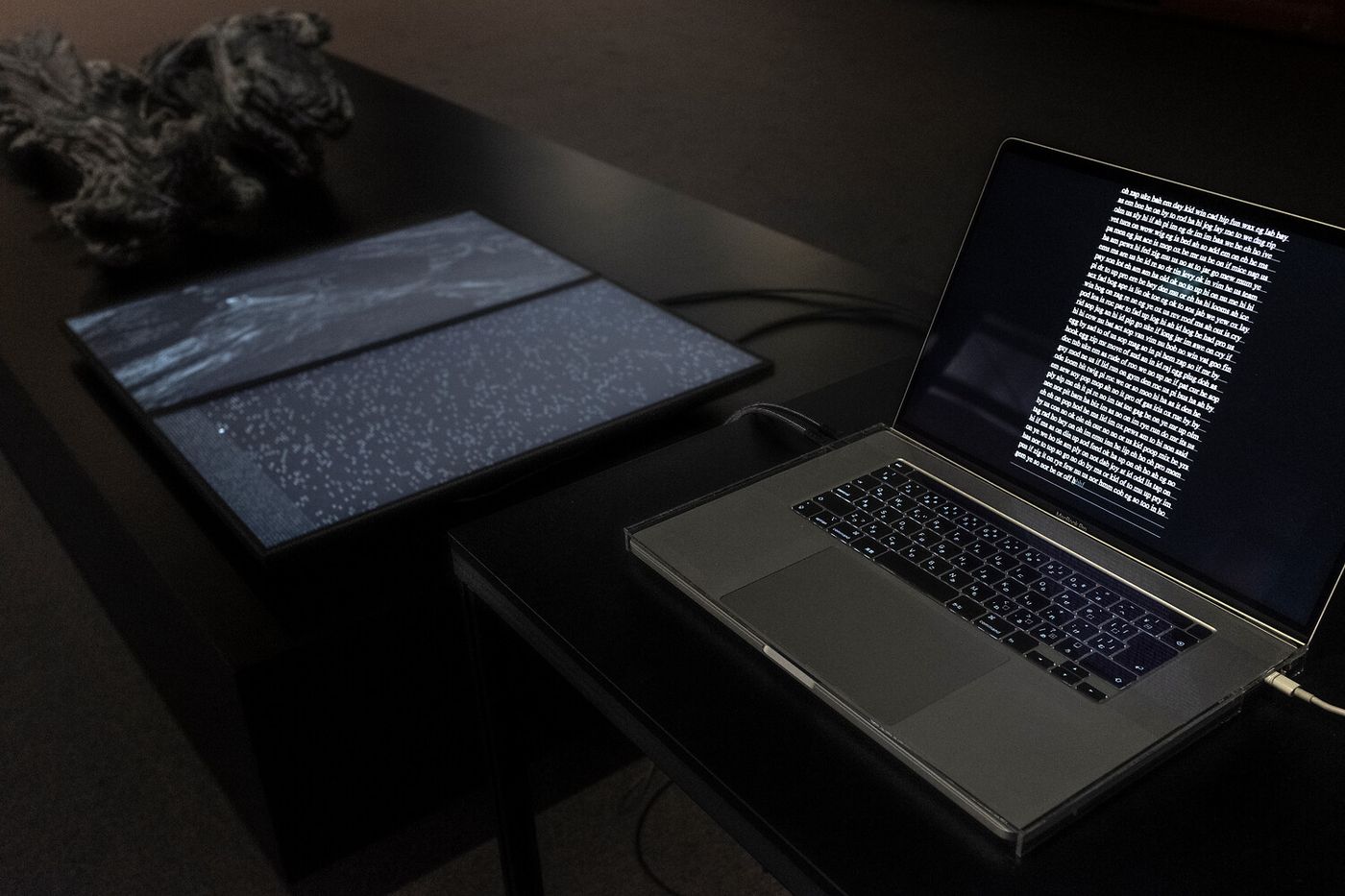
When working with technology, how do you see the relationship between the computer and the artist? Is the calculation simply a tool, or does it play a more active role in shaping your art?
There have been two ways to collaborate with the computer. One is using applications such as painting tools, photo editing software, and 3D modeling programs. In this approach, we use the computer as a kind of simulator of the tools in the real world. We interact with it through a mouse, keyboard, pen tablet, or head-mounted display—these are all just extensions of our hands or body. We still call the main interface of the operating system the "desktop," even though there is no actual desk inside the computer of course. The other way is coding, which is what I do. It is the way to extend our brain, not body. Creating an algorithm to generate an artwork is, in a sense, an externalization of artistic identity. Traditionally, art has been created by humans, but today, this idea is already being questioned. This leads us to consider AI. And that’s why I said there have been two ways. I need more time to figure out its possibilities but I’m quite sure that the real question about art and AI is not about creating artwork, but about the viewer. Even though AI generates something truly remarkable, we can not even notice it unless we can see the value we already know in it. It means the limits of AI are actually the limits of human beings.Your work often explores deep philosophical questions about time, the universe, and the self. How did you begin engaging with these themes and in your experience, does data ever contradict or challenge human understanding?
For the first question, I don’t have an answer. But to code something to create, you need to understand how it works even when you don’t know why you are creating. Even you don’t fully understand it, you need to assume some logic behind what comes out of your creation. I mean, when I code, I need to think about all the unquestionable things in the real world. For the second question, What exactly do we call “data”? Data is information stored in matter. In this sense, everything that physically exists carries data. At the same time, data cannot exist without matter. Even when we access the "cloud," the data isn’t floating in the air. it is physically stored on a server somewhere on Earth. As we all know, data consists of 0s and 1s. But without the right way to interpret it, it’s meaningless—just like a stone sitting inside a computer. For example, space agencies like ESA or DLR provide digital elevation models of Mars. If you know how to decode the data, you can reconstruct a highly detailed surface of Mars. But if you don’t, it’s just gigabytes of unreadable bytes.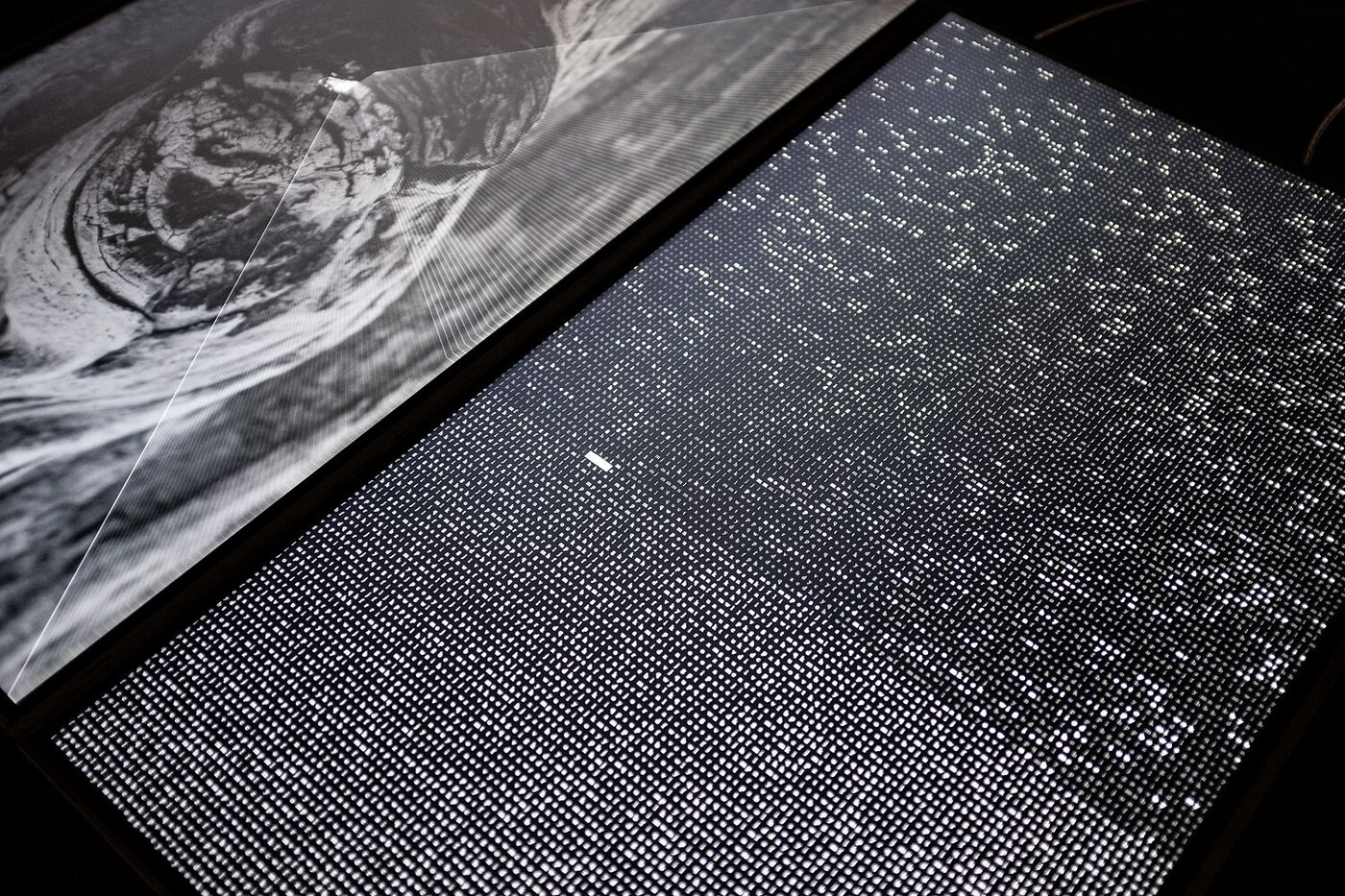
You participated in a residency at Kavli Institute for the Physics and Mathematics of the Universe (IMPU) at the University of Tokyo as well as at the ALMA Telescope in Chile’s Atacama Desert. Can you share how the experience of working in different environments has shaped your understanding of art and influenced your process of creation?
IPMU and ALMA are both extremes of science, but one is focused on theories and the other on observation. These are essentially two ends of physics. In IPMU, there are huge blackboards and whiteboards, but little to see unless you talk to the people. But most of the research is highly abstract and I don’t even understand what they are solving most of the time. The questions themselves are far beyond my knowledge. And at ALMA, which is located at 5,000 meters above sea level, it’s literally beyond the limits of my body. I needed an oxygen tank to breathe. The scale of the antennas spread across the desert and the precision of their arrangement are both beyond human perception, one is too large, the other is too fine. In different ways, they are beyond my limit but I experienced it. Sometimes there are nothing we can do but experience. We have that kind of sense when we encounter an outstanding artwork actually. I loved both places because I do both—conceptual thinking and engineering—at the same time as an artist. I respect the people I met at both places who are pushing the extremes.