Art · April 13, 2026
Curator Dr.Nadim Samman about Adam Pendleton
Auf Deutsch lesenStarting April 19, the Langen Foundation will present the visionary solo exhibition 'Adam Pendleton: Can I Be?'. Honored by the American Academy of Arts and Letters for his groundbreaking contribution to contemporary painting, Pendleton brings to Europe an aesthetic that radically interweaves language, history, and visual abstraction. Pendleton’s works invite not only viewing but also reading: in a play of black and white, spaces of radical openness emerge in which meanings are constantly being reshaped.
Dr. Nadim Samman dives into detail about Adam Pendleton's solo exhibition, his own experiences as a curator and what to look forward to at Langen Foundation.
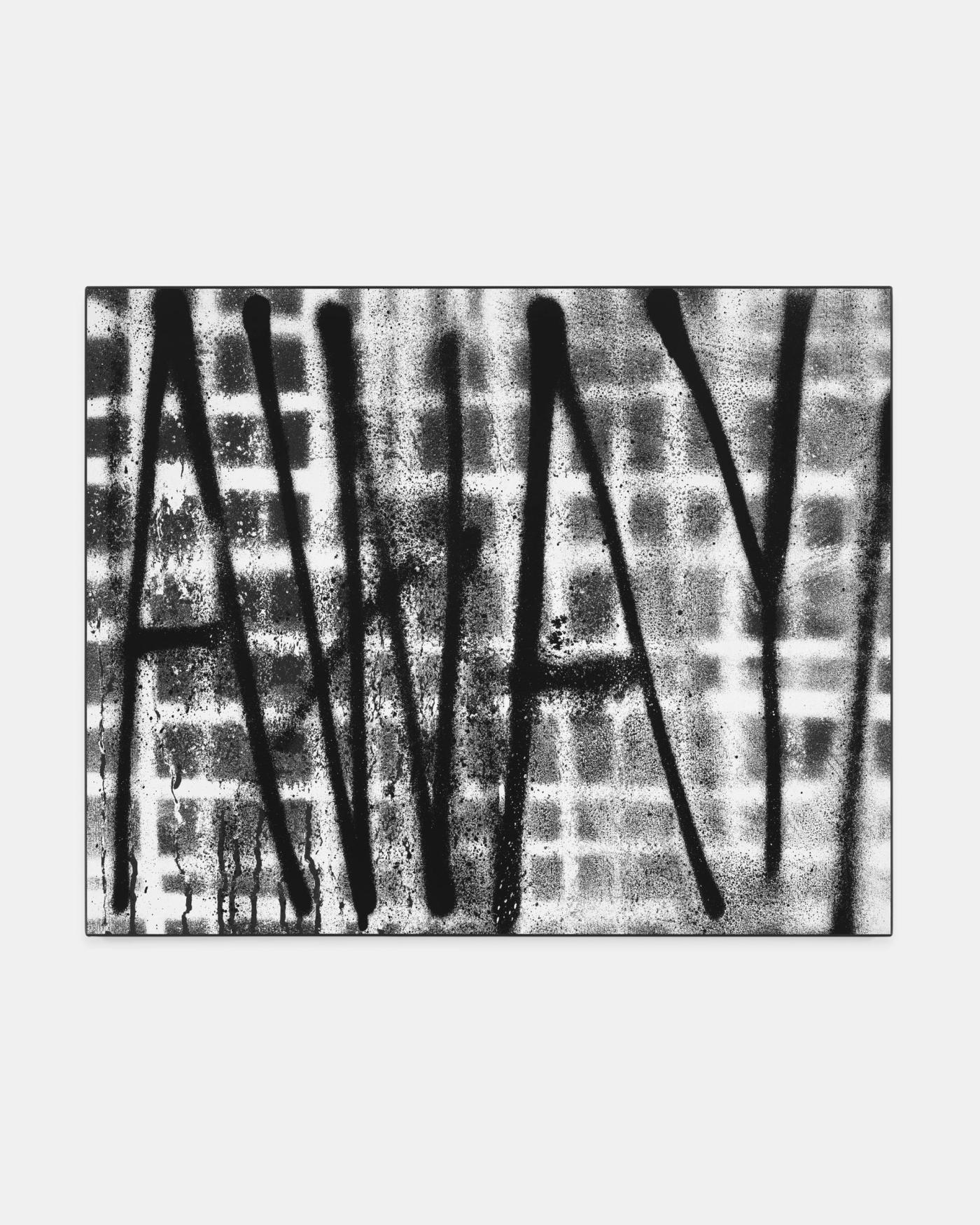
On April 19, the Langen Foundation will open the solo exhibition Adam Pendleton: Can I Be?
What motivated the foundation to present a major exhibition of Pendleton’s work at this moment?
In 2024 Adam Pendleton received a major award from the American Academy of Arts and Letters—recognizing his contribution to the history of painting. This honor only confirmed what we have long felt: that his work should be better known in Europe. Can I Be? explores abstraction, language, and history—examining how these forces converge in unlikely and poetic ways. It is also concerned with racial justice and the vagaries of communication. These are pressing topics today.
Adam Pendleton describes his artistic approach as 'Black Dada'.
How would you explain this concept, and how does it shape the works presented in the exhibition?
‘Black Dada’ collides two terms. ‘Dada’ carries forward the artistic spirit of disruption, forged in the inter-war period, while ‘Black’ functions as an unstable signifier, oscillating between meaning and abstraction. Together they invoke a resonance between the European avant-garde’s reaction to World War I and African American approaches on racialized violence today. Through this term, Pendleton frames history not as a fixed archive but as a living field, where artistic gestures from different contexts can speak to one another across time. Simultaneously, he fixes upon the topic of radical openness (of meaning), of re-reading, and iteration. You ‘read’ his work. You re-read it, its implications shift in and out of focus. Sometimes its ‘black and white’, a second later and it’s something else.
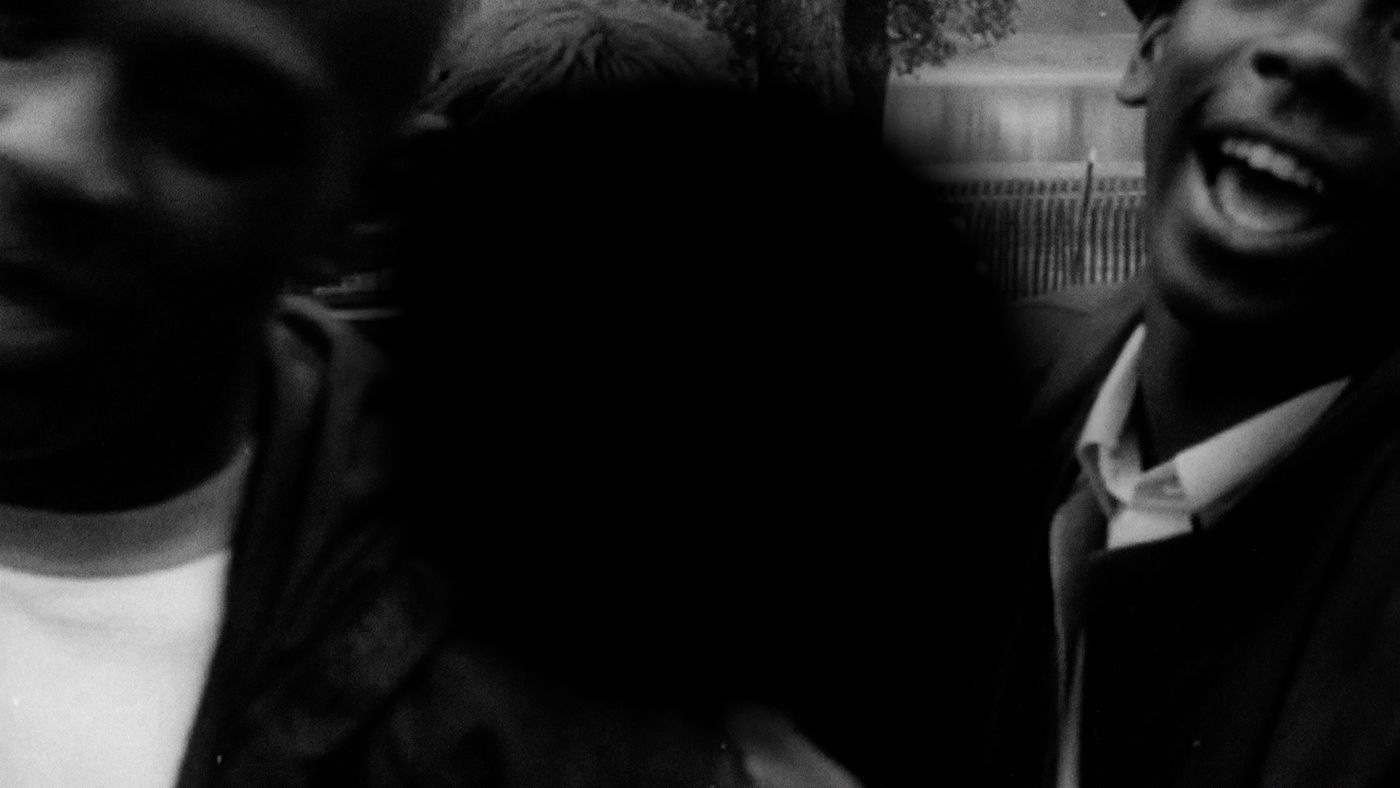
Pendleton’s work often engages with language, history, and political thought.
How do these themes resonate in the current moment?
German society has made meaningful commitments to anti-racism in rhetoric but lags in practice. The 2020 George Floyd protests sparked a broader public conversation about racism in Germany, but institutional resistance to the term "structural racism" has slowed concrete reform. Debates over colonial memory—repatriation of stolen artifacts, the terms of the Namibia genocide deal, street and place names with colonial origins—continue to expose a gap between the self-image of a nation that has supposedly "worked through" its past (Vergangenheitsbewältigung) and the selective way this process has been applied. It’s important for the German cultural scene to check in with leading voices from the U.S and beyond, whose work can help build intellectual and—importantly—imaginative bridges towards a deeper reckoning with who we want to be: „Can I be?“. By the way, I say this as a newly minted German citizen!
The exhibition brings together works across different media.
Are there particular pieces that you feel are key to understanding Pendleton’s practice?
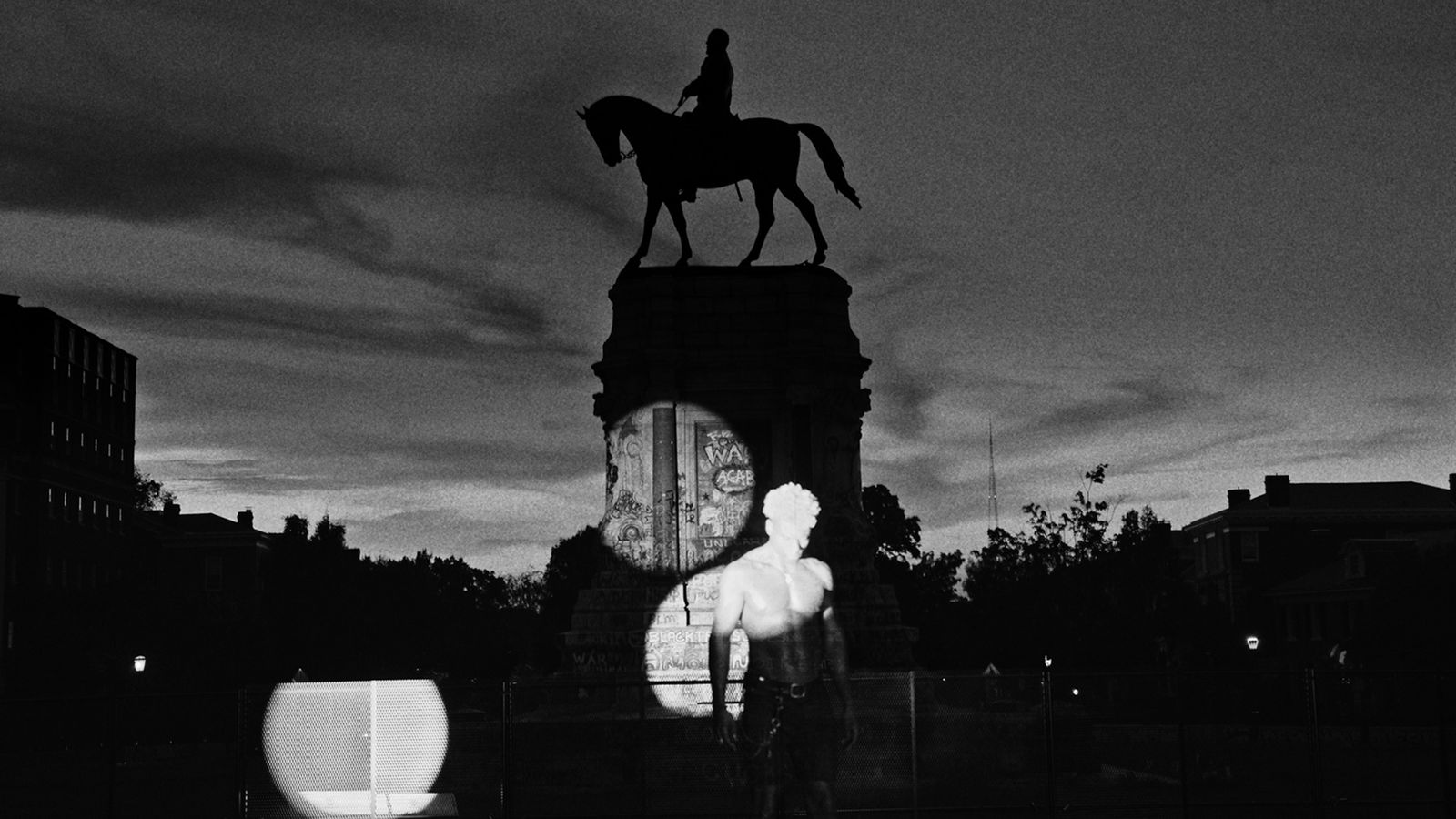
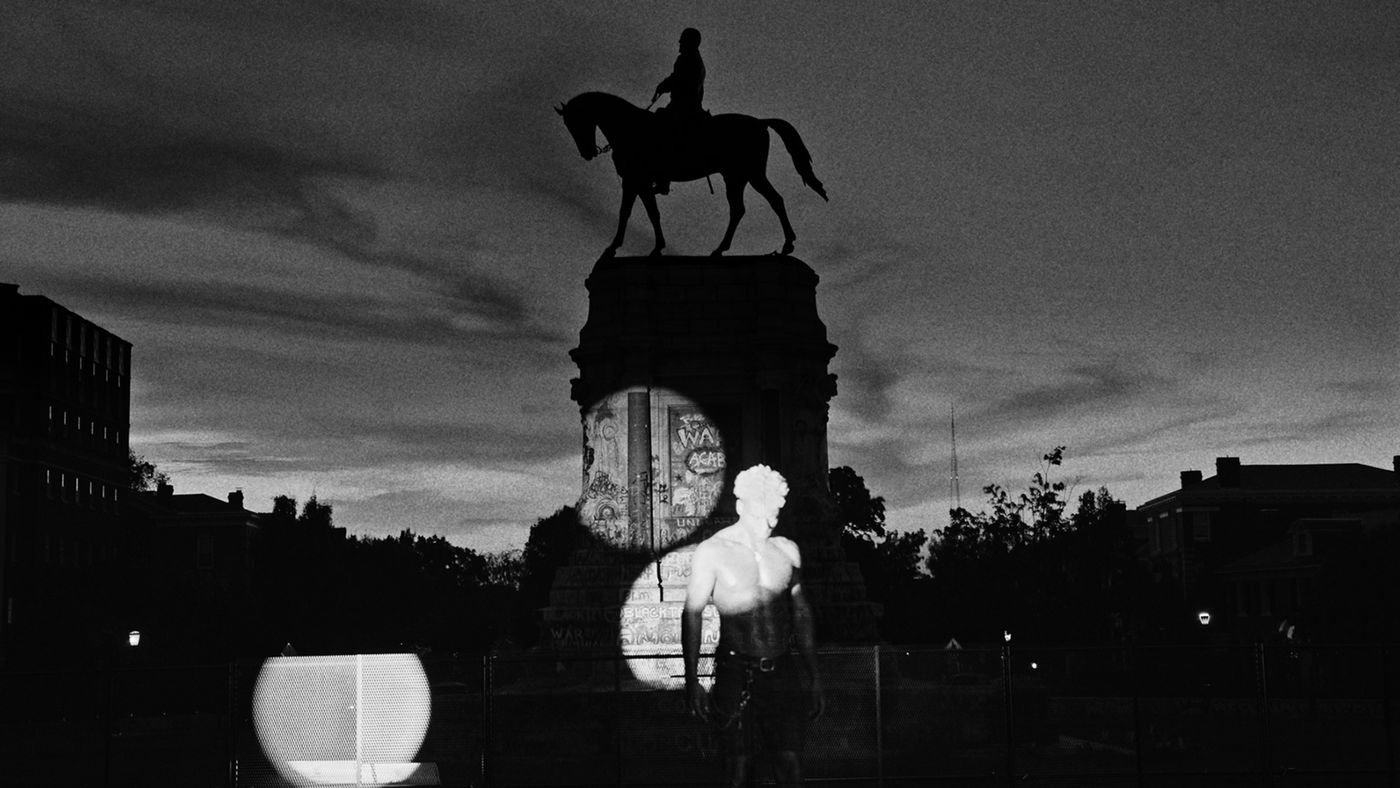
Pendleton works against political certainty. Instead of clean resolution, his works fragment, layer, and abstract. Toy Soldier takes as its subject the Robert E. Lee Monument in Richmond, Virginia; a Confederate memorial that stood for over a century before its vandalism and subsequent removal following the Black Lives Matter protests in 2021. The video is shot in black and white and uses stroboscopic effects to visually break up the sculpture, while an intense soundtrack of poetry and music intensifies this deconstruction. The piece doesn’t illustrate the history of the statue, nor the protests, in any conventional sense. But it does make these topics felt, as rhythm, pressure, and visual and sonic unease.
Looking back at the process of developing the exhibition: which questions guided you most strongly, and were there any particular challenges or rewarding moments along the way?
This is my sixty-sixth exhibition and the first time I have ever worked with a painter. I have always loved the medium—perhaps more than any other. This has been a new kind of collaboration. It has been interesting to learn how Adam ‚frames‘ situations and ideas, and to discover where his ‚hand‘ operates in the space beyond the canvas.
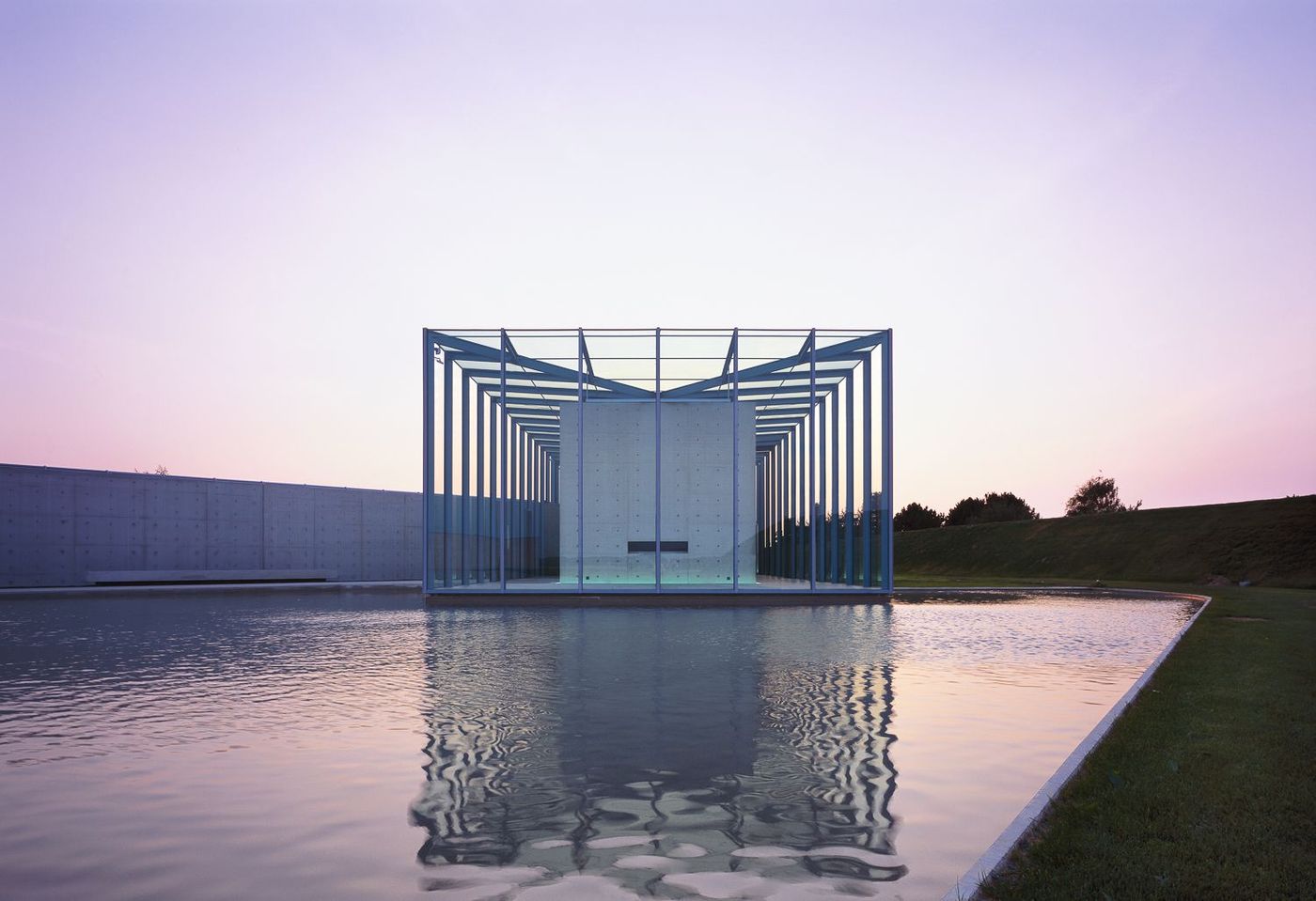
The Langen Foundation, designed by Tadao Ando and located on the former Hombroich missile base, offers a very distinctive architectural context.
How did the architecture influence the way the exhibition was conceived and installed?
Whenever I am in the building I just start floating through the galleries in sequence, even before I know that I am walking. What I find distinctive about the architecture is not that it is grand or clean, but that it takes over my subconscious in order to physically pilot me. I suppose Adam‘s exhibition at Langen is a kind of dream sequence. I suppose they all are!
How should visitors ideally move through the exhibition? Is there a particular narrative or rhythm you envisioned?
I think I just answered the question. You will find yourself gliding through it.
What do you hope visitors will take away from Adam Pendleton: Can I Be?
There is something important in Adam‘s continual return to poetry, and in particular the works of Amiri Baraka—whose words feature in one of the video soundtracks, a wall piece, and in the term the artist uses to describe his approach ‚Black Dada‘ (taken from one of Baraka’s poems). For Adam, language is never illustrative. At a moment when words are weaponized, when meaning is distorted, there is something interesting about an artistic meditation on language as productive abstraction, rather than the ‚voice of authority‘. At the same time, words and images co-mingle in his paintings in ways that seem in tune with our experience of media today.
From your perspective, what is the central responsibility of a curator when developing an exhibition?
A good curator is commissioned to play the role of double agent, representing both material exigencies—including the patron or commissioning institution‘s needs—and the artist‘s will. In addition, he smuggles in his own taste! The last part is an important triangulation that allows the whole thing to move; to become a dialectic. Having said this, the best justification for making an exhibition is that what is being communicated could not be put across better in another format. The only niche that matters is excellence.
What originally led you to pursue a career as a curator?
It was always about art. It could have been art school, but it was a philosophy degree (inspired, inititally, through encounters with Futurist and Surrealist manifestos). After that it should have been art school, again, but it ended up being an art history masters. I wanted to understand why and how my artistc inspirations had come into being so I could make new and exciting things happen too. It was only then that I heard the word curator! I became one the very second I heard the term. I submitted my Phd thesis in 2011 and went to Marrakech to curate the biennale. It was hard to come back to academia after that. I moved to Berlin to buy time. A decade later, I have coming up for air in the Rhineland!
Are there any upcoming exhibitions or projects you can already share with us?
We are working towards a major exhibition with the Japanese artist Tadashi Kawamata for autumn 2026. This will involve an ambitious site-specfic installation running throughout the whole of the building. This artwork will, simultaneously, accommodate historical objects from the Victor and Marianne Langen Collection of Japanese art. It further extends the surprising encounters between ancient and contemporary work inaugurated with a previous show, Incarnate. This, and what will come, is the kind of exhibition that very few institutions are equipped to do well.
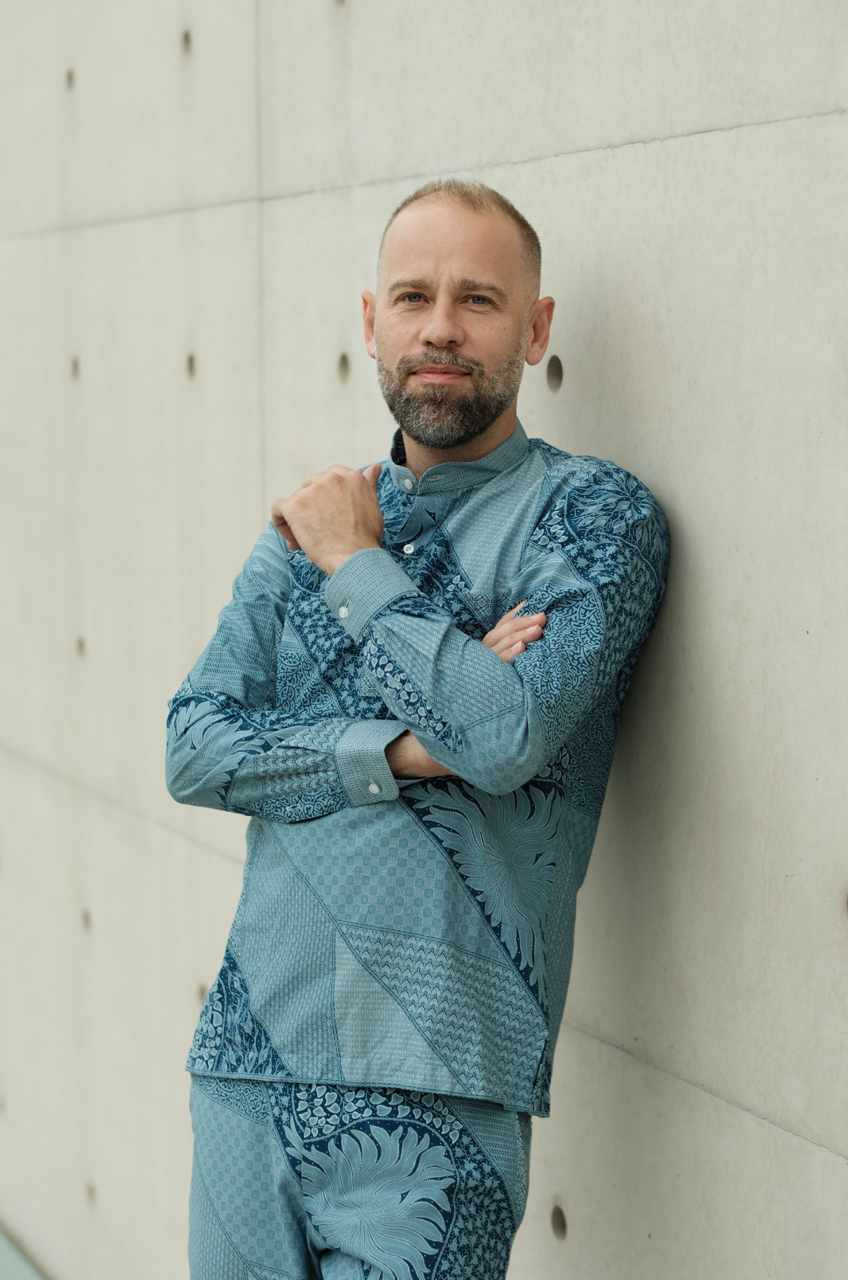
DR. NADIM SAMMAN
curator Langen Foundation Neuss
The Adam Pendleton exhibition will be open from April 19 - August 09, 2026. You can find more information about your visit on their website.
← Back to magazine