Art · September 7, 2026
Trust the Process: Emil Urbanek on Their Residency at KPM Berlin
EMIL URBANEK ON THE FIRST KPM RESIDENCY AT ART DÜSSELDORF
Auf Deutsch lesenFor the first time, the KPM Foundation – Königliche Porzellan-Manufaktur Berlin has awarded an artist residency to a position from the NEXT section in the context of Art Düsseldorf. A jury of representatives from the Düsseldorf and Berlin art scenes selected the painter Emil Urbanek, represented at the fair by the Weserhalle Gallery, Berlin, as the first recipient.
Emil Urbanek (b. 2000) lives and works in Berlin and has been studying at the Berlin University of the Arts since 2019. In their painting practice, they work with large pieces of graphite, which they rub through screens over the canvas to create pigment – at KPM, this practice met a material that is harder, smoother, and more unpredictable than any canvas. They spent two weeks working alongside the manufactory’s master painters; during Berlin Art Week, they are now presenting “Never Empty”, the collection created there, at the KPM Pavilion.
A conversation about the scent of clove oil, painting on sealed surfaces – and what happens when you trust the process.
You’re a painter; at Art Düsseldorf 2026, you were represented as an artist by the Weserhalle Gallery and were selected for a residency at KPM Berlin. What drew you to explore porcelain and KPM’s work?
I found the challenge of branching out from my artistic practice to work with a new material exciting. Its texture and surface differ greatly from those of a canvas. I was particularly drawn to the idea of gaining insight into such a highly professionalized, versatile manufactory.
What was your first day at the manufactory like, and what surprised you about the place?
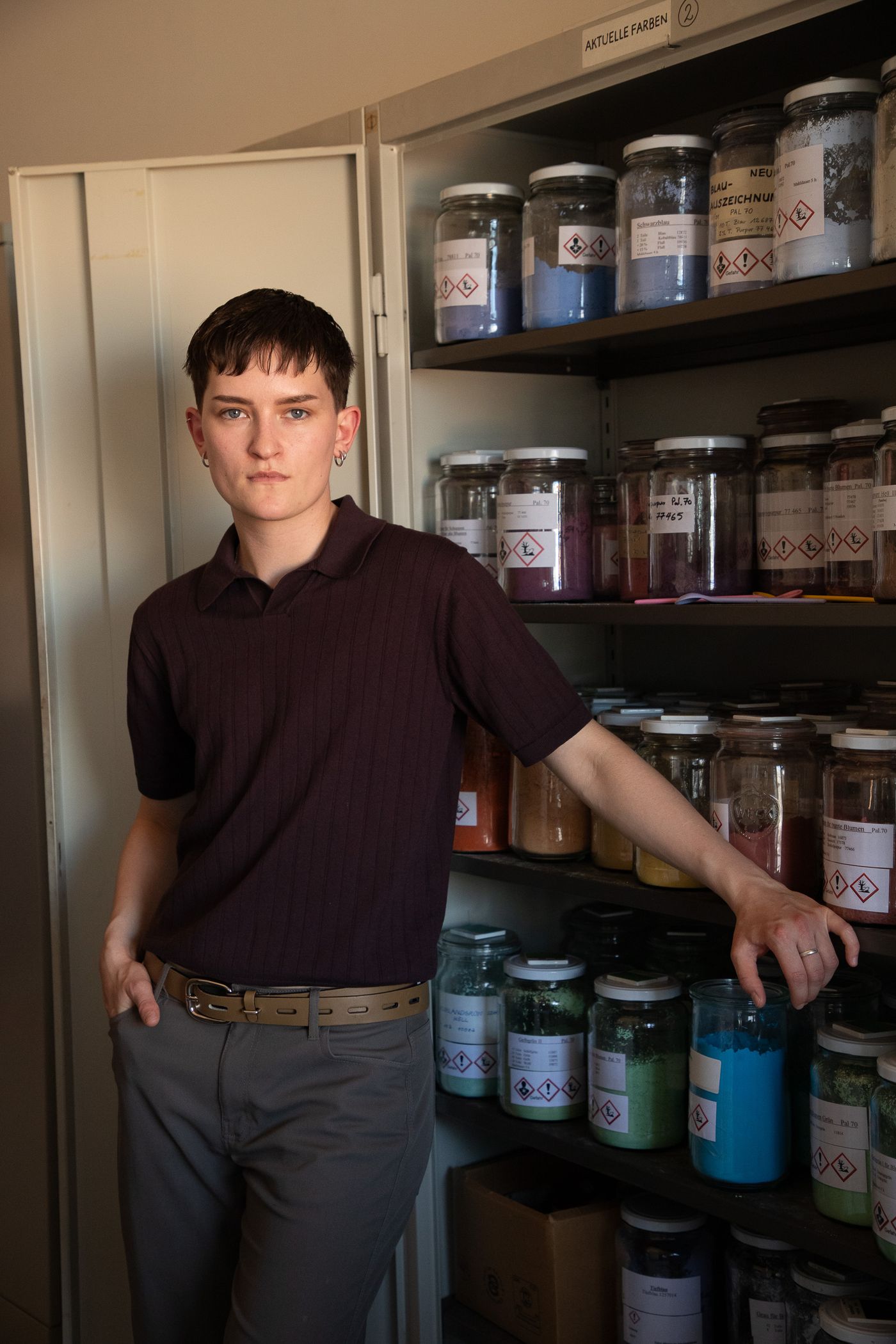
On my first day, I was shown around many parts of the manufactory. First, the KPM archive, the large production halls, and individual workshops, such as the screen-printing workshop. Afterward, I had the feeling, “This is a bit like Willy Wonka for porcelain.” On the upper floor, there are several painting studios; it always smells of clove oil there – that scent accompanied me the whole time.
You worked for two weeks with the master painters at KPM – what did you learn from them, and was there a particular technique or process that especially impressed you?
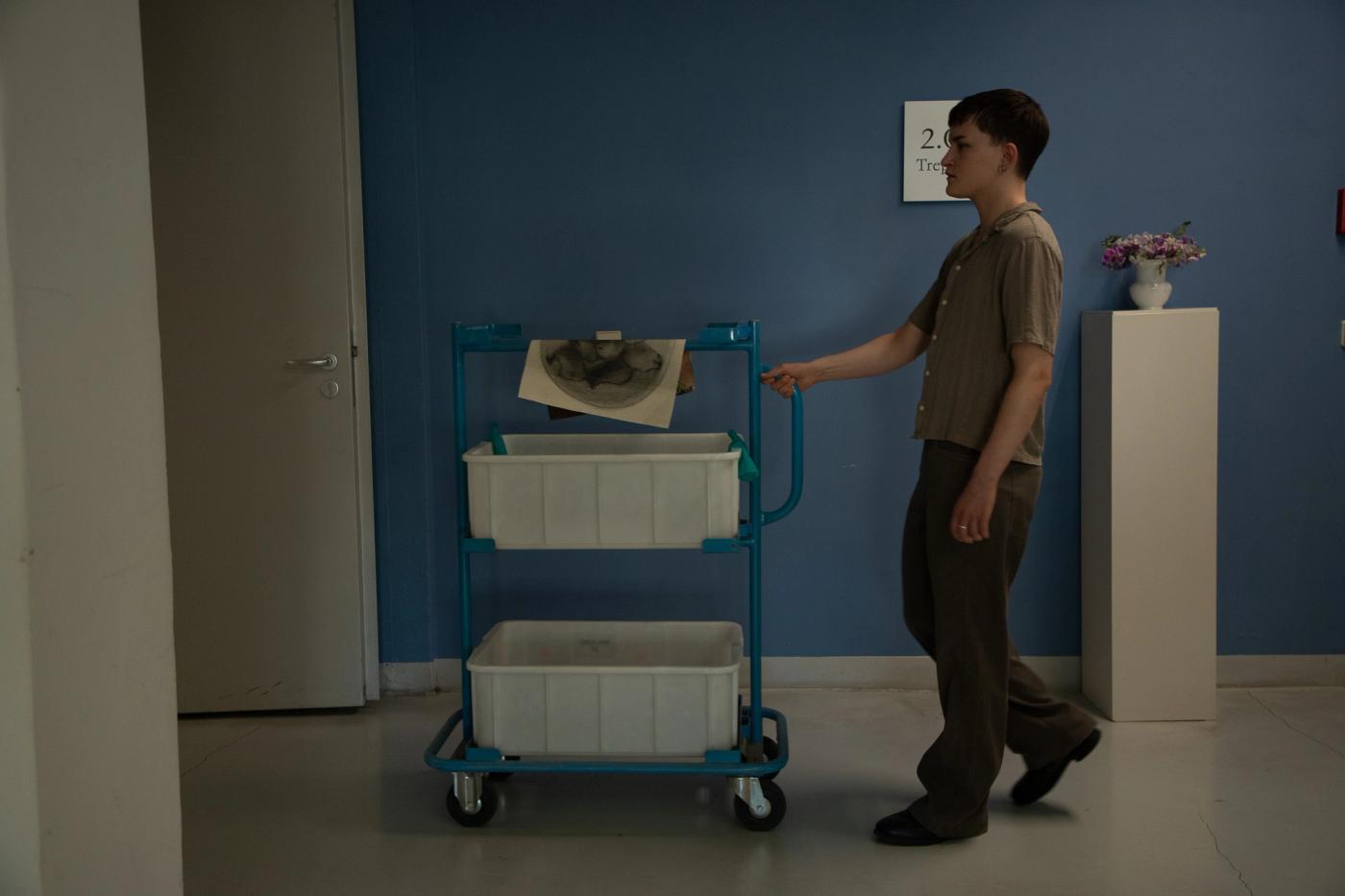
I learned so much during my time at KPM. What struck me most was how carefully and thoughtfully you have to move through the hallways and doorways. After all, you might at any moment run into someone carrying a tray of freshly painted porcelain pieces. Annett, a porcelain painter who mentored me during those two weeks, is a master at applying paint with a palette knife – something I failed miserably at in comparison.
What is the biggest difference between painting on porcelain and painting on canvas – and how did you respond to that?
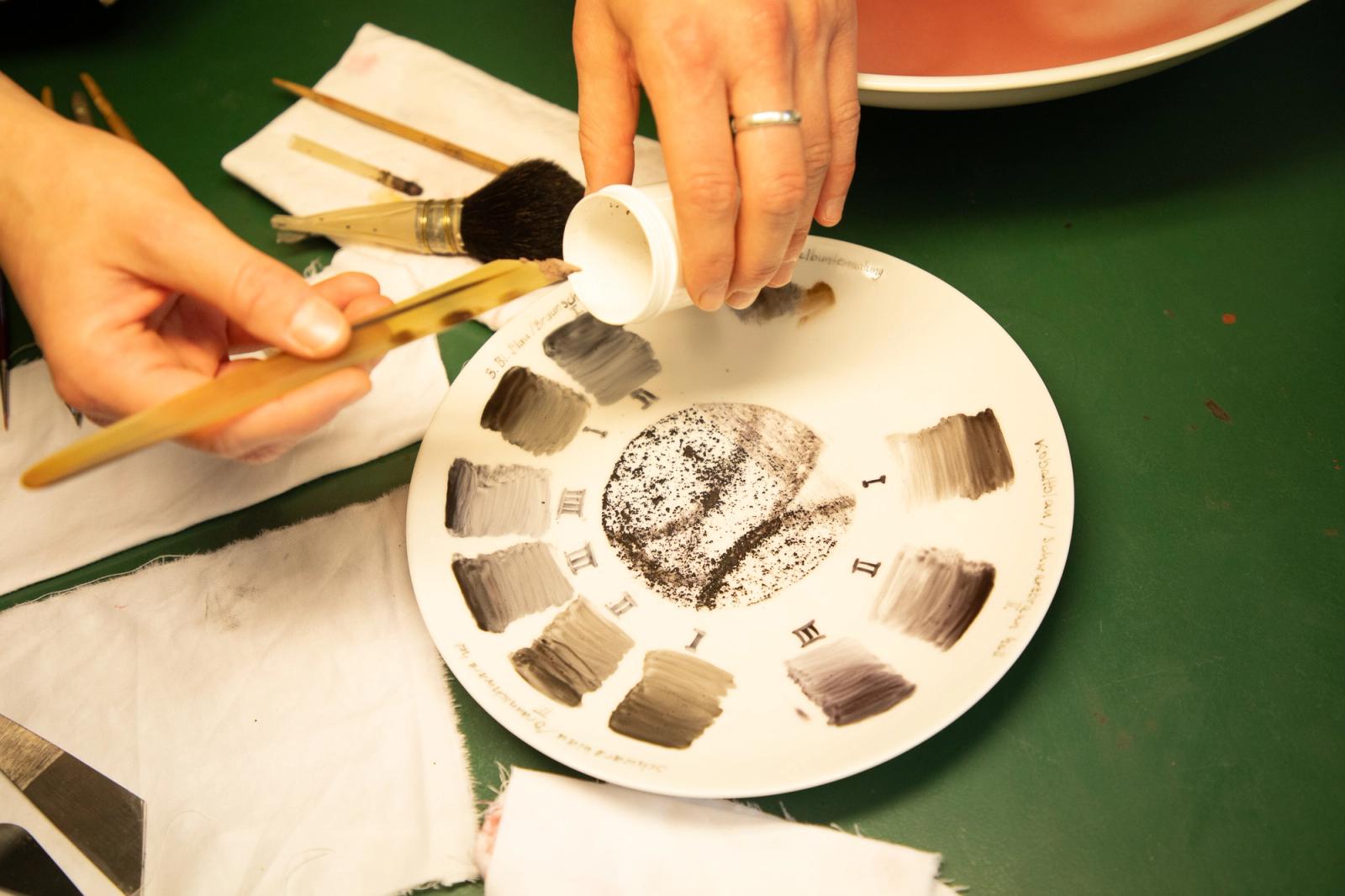
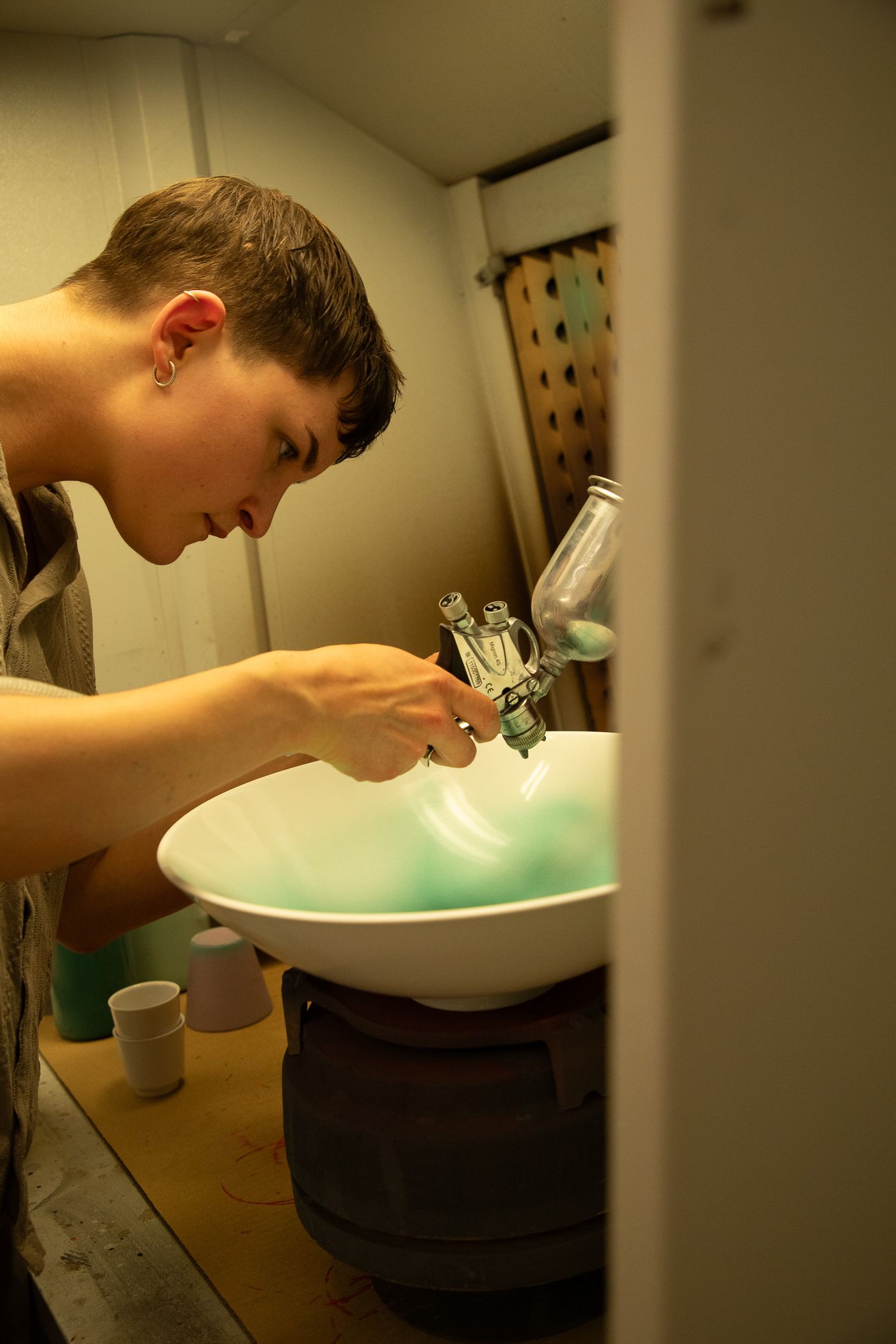
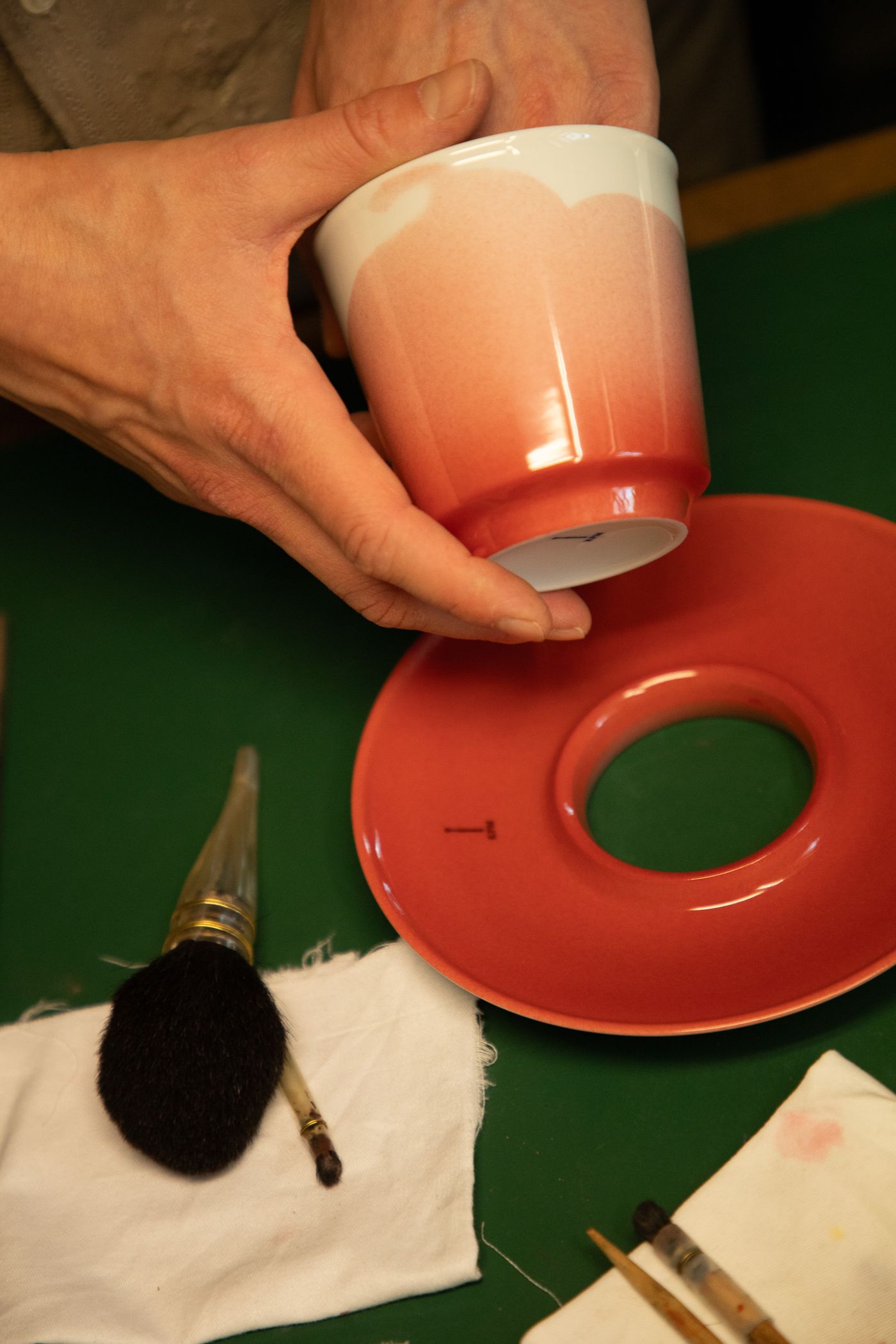
A key component of my painting practice is working with large pieces of graphite, which I rub through screens over the canvas to create pigment. We conducted several experiments to adapt this technique to porcelain, firing loose pigment or applying it with turpentine oil to form pasty tubes, in the hope of obtaining a solid mass that could be rubbed through a sieve again. The surface of the white-glazed porcelain was hard and sealed, whereas canvas is soft, beige, and highly absorbent. Furthermore, the inside of a bowl has a concave shape, which has a particular impact on working with loose pigment. After some time at the manufactory, I decided to work with an airbrush, as I found the technique very interesting and it bore a certain resemblance to the visual language of my painting.
Firing changes the colors; the result only becomes apparent after the piece comes out of the kiln. How did you deal with this unpredictability?
At first, I had to get used to how firing changes the color, but after a while, this change became somewhat predictable. In the meantime, I always told myself, “Trust the process.”
How do you usually approach a painting – do you have a set way of working, or do many decisions come about only as you’re painting?
That varies with each painting. Sometimes I have a specific vision that I try to depict, especially if it’s important to a narrative and spans multiple paintings. Other times, I let the materials do their work and see what they tell me. Working with graphite pigments is very exciting because they react to slight air currents as they fall and to moisture when they land on the canvas. As a result, I only have a certain degree of control.
Has your encounter with this craft changed anything about your own working method or your way of thinking?
Among other things, my time at KPM sparked my interest in working with an airbrush. Some of the characteristics of this technique had already interested me long before in my painting practice – the interplay of soft surfaces and sharp edges, the grain of a surface, the gradual appearance and disappearance of a trace.
What will you be showing in September during Berlin Art Week?
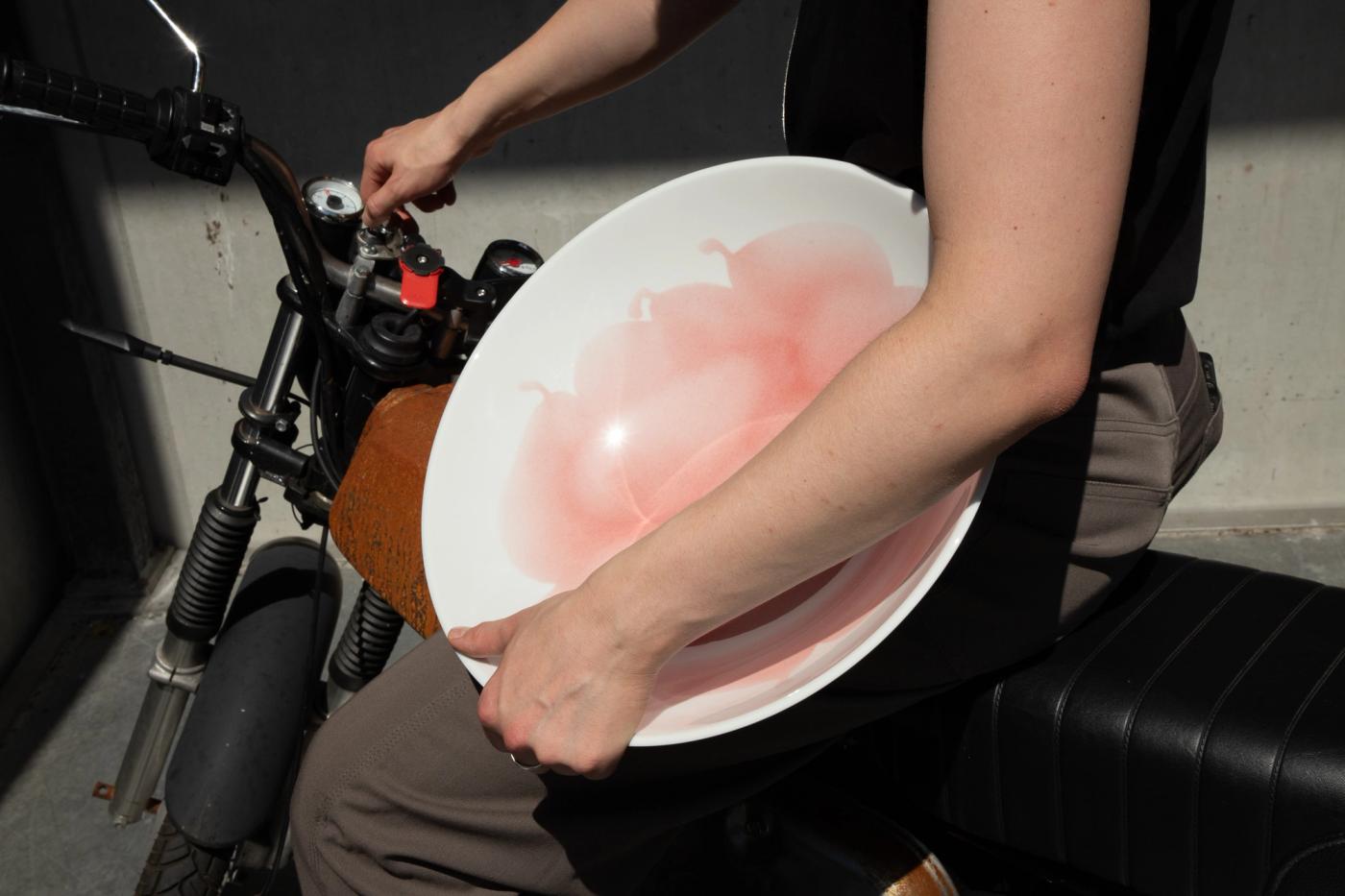
In September, my collection “Never Empty” will be on display at the KPM Pavilion. The collection consists of bowls and cups of various sizes. The collection takes concepts from my painting out of the pictorial space and into a physical one, and something unfolds that relates to our everyday gestures. The inside of the bowl, for example, becomes a curved playing field where the idea of a fruit and an actual fruit lean against one another.
What are your plans for the rest of the year – and what have you taken away from your residency at KPM?
I’m currently working on a series of paintings that will be on view in October as part of a solo exhibition at ThisWeekendRoom Gallery in Seoul, Korea. In November, I’ll be participating in the group exhibition “Navigating Angst”, curated by Anne Zühlke and Robert Punkenhofer, as part of Vienna Art Week. My time at KPM has shown me how inspiring it can be to immerse myself in completely new working processes, to work with new materials, and to continue exploring similar themes in the process.
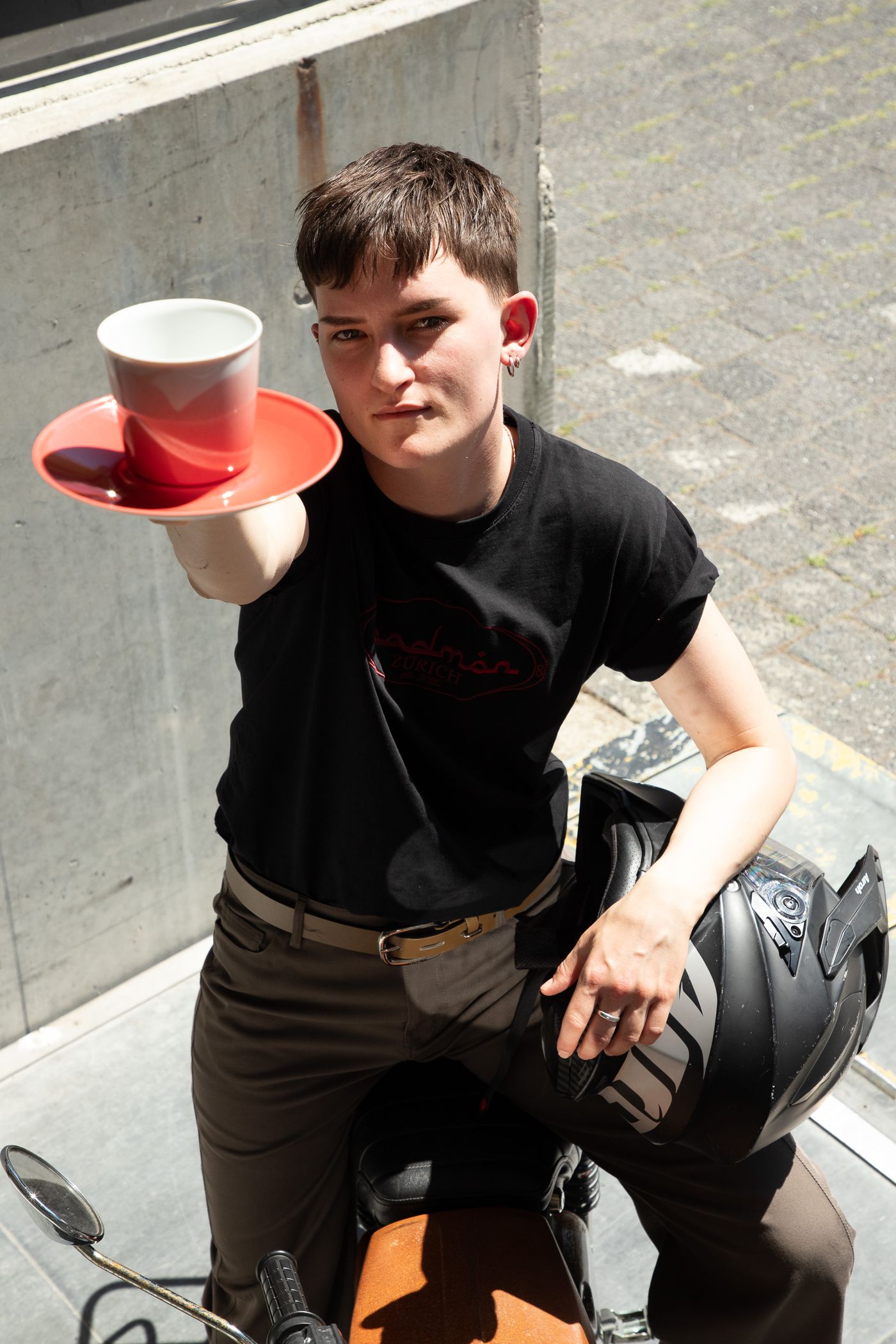
Cover image: Emil Urbanek at KPM Berlin Residency, © KPM Berlin / Juan C. Bautista 2026